Research literacy
How to Read a Scientific Study
A practical guide to methods, controls, results and limitations—without getting lost in the headline.
Read the question before the conclusion
Start by identifying what the researchers wanted to find out. The abstract is a useful summary, but it cannot contain every detail. Read the full paper where available, including its methods and limitations, before treating a headline as the study’s conclusion.
Identify the type of evidence
Check what was actually studied: a computer model, isolated molecules, cells, animals or people. Different designs answer different questions. An observation in one setting does not automatically apply to another. Also distinguish original research from a review that brings earlier studies together.
Look for the comparison
Ask what the findings were compared against. Were there appropriate controls? How were samples chosen, and how many independent observations were made? Look for steps that reduce bias and for enough procedural detail to understand the comparison. A clear graph cannot compensate for an unclear study design.
Read figures carefully
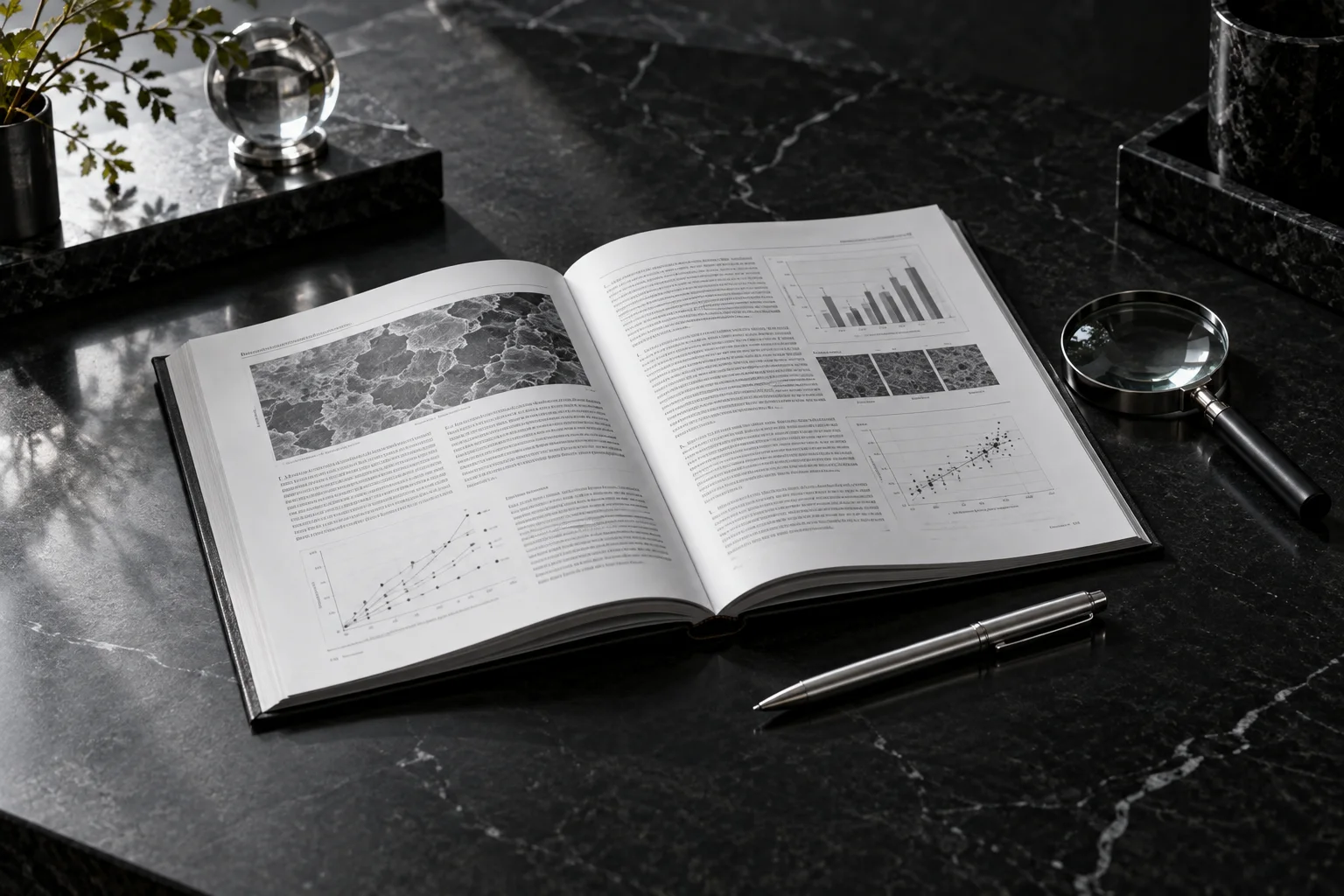
Check axis labels, units and scales before looking at the apparent size of a difference. Read the caption to learn what the points, bars and error bars represent. Ask whether the figure shows individual observations or a summary, and whether its presentation matches the claim in the text.
Give limitations their own attention
Look for uncertainties the authors acknowledge and alternative explanations they discuss. Check funding and competing-interest statements, the publication date and whether the work has been peer reviewed. A declaration of an interest does not by itself invalidate a study, but it is useful context.
Use a short checklist
- What question was asked?
- What was studied, and in which setting?
- What comparison supports the conclusion?
- What do the results show directly?
- What remains uncertain?
- How does this fit with other research?
Keep your notes in plain language. If a key detail is missing, record it as an unanswered question rather than filling the gap with an assumption.
Sources and further reading
General science education. This article does not provide instructions for preparation, administration or personal use.